PROJECT
Positioning Study for Coffee Packaging
SKILLS
Sustainable Design
Packaging Design
UX
Systems Thinking
Research
Packaging Design
UX
Systems Thinking
Research
GOAL
Assess a type of packaging used by a chosen brand/product, and explore ways to improve its ecological impact.
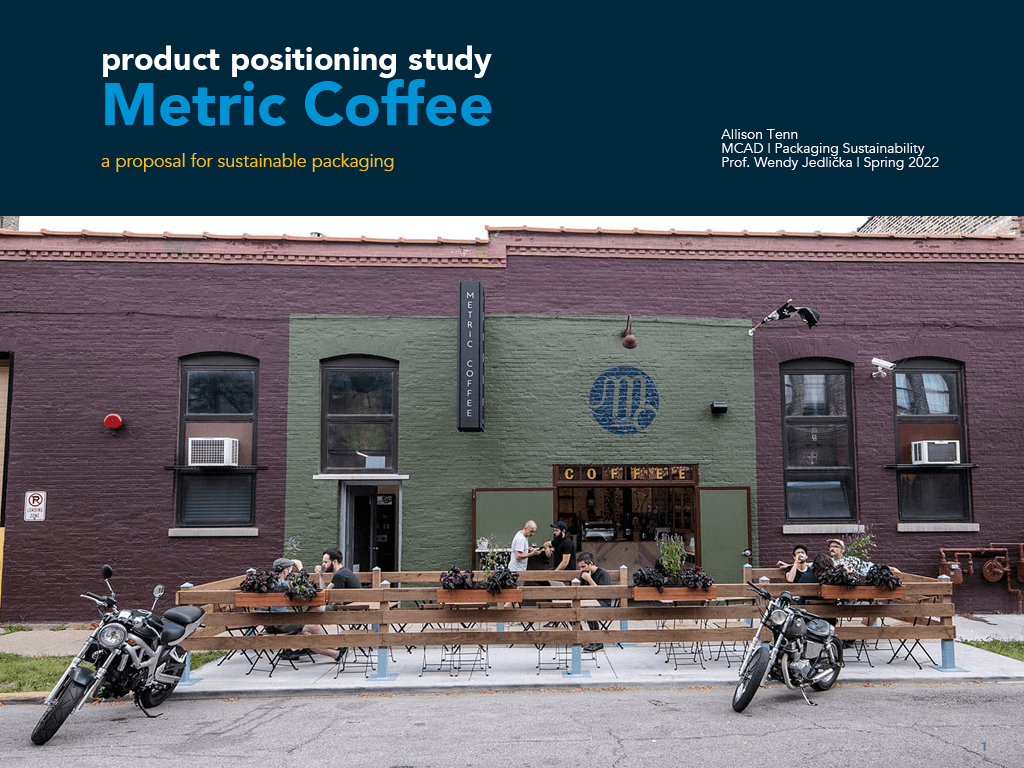
The packaging used for this project was a common resealable lined plastic bag used for whole bean and ground coffee. Independent Chicago roaster Metric was chosen as a stand-in brand due to its preexisting commitment to transparency and ethical sourcing of its product. A small roaster with locally-focused distribution was also chosen to help demonstrate a solution model that could be replicated within similar markets.
CHALLENGE
Packaged foods have specific requirements necessary to preserve flavor and freshness and protect from elements such as moisture, light, and oxygen. This typically needs to be balanced with the needs of users (both brands and consumers) such as transportability, product visibility on a store shelf, and volume/price ratio that fits the preferences of the average customer.
PROCESS
Customer Research
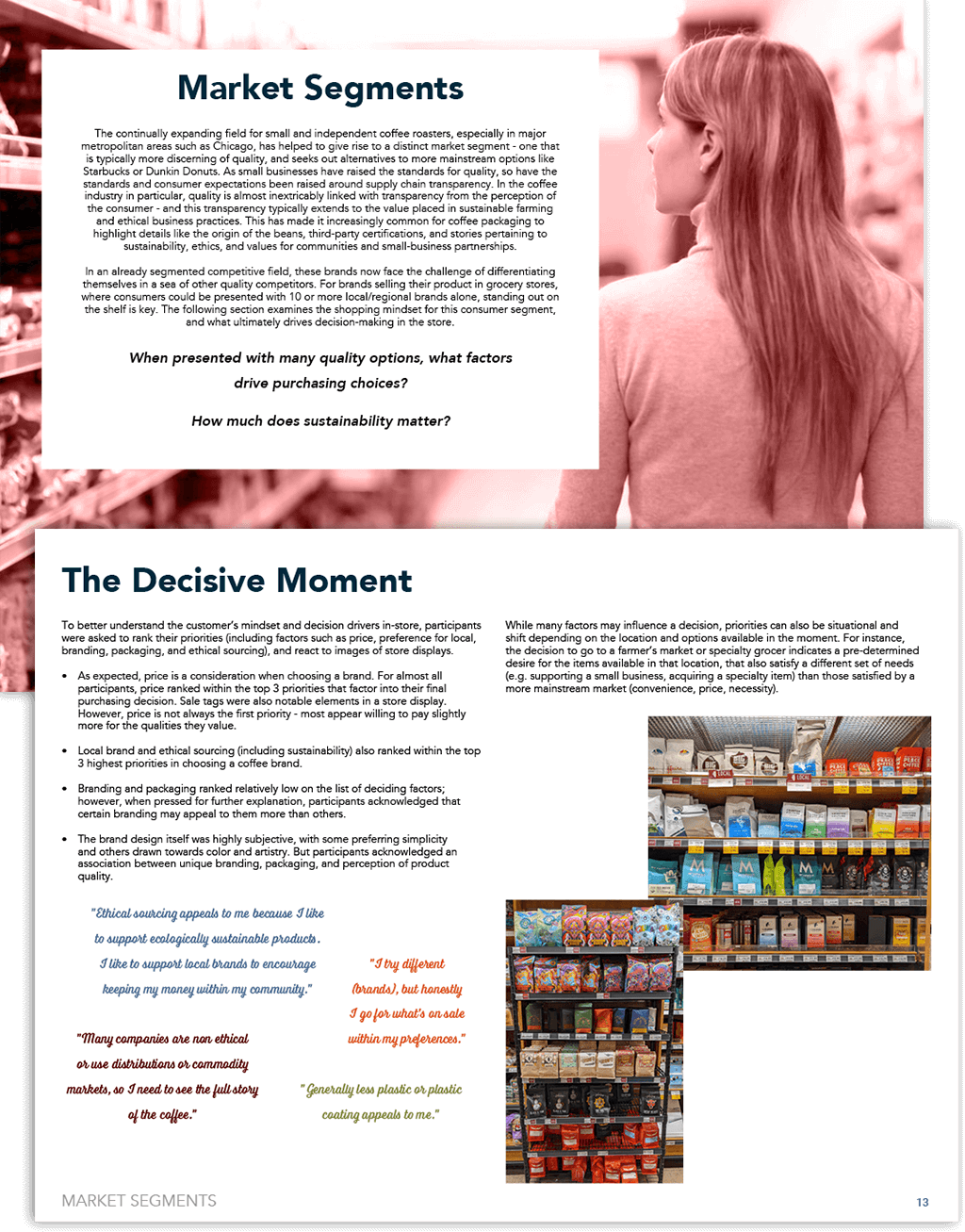
One of the initial steps in the research process involved an analysis of close competitors—independent brands with local or regional distribution that were already committed to some sustainable business practices, to see if anything could be learned from what others are doing, as well as to inform what factors could appeal more to consumers.
Surveys were then conducted among potential customers—those who brew coffee at home, and live in a metropolitan area with many independent coffee brands—and specifically the likely customer base for Metric and its close competitors—those who prefer small independent coffee shops over large chains, those who shop at specialty markets, and those who might choose a product for its ethical or sustainable business practices. These surveys revealed what priorities factor into their decision-making when choosing a coffee brand in-store. While the type of packaging ranked lower compared to price and quality, responders did prefer ethical sourcing and acknowledged the branding having an influence on their perception of product quality.
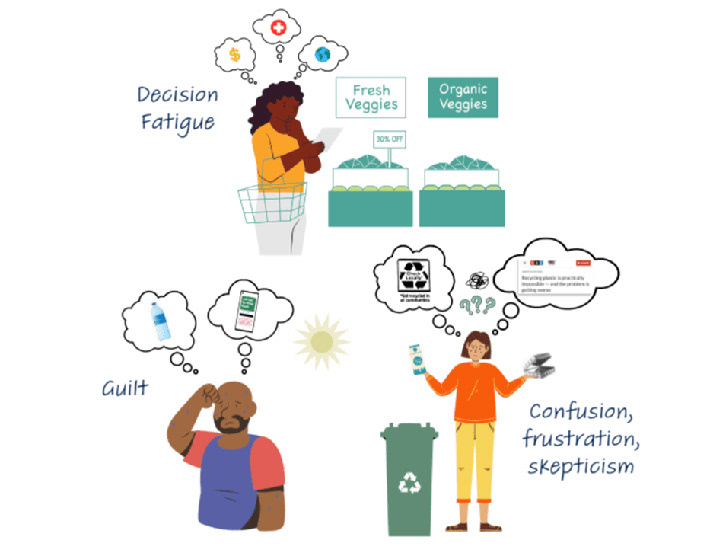
This meant there could be opportunities to appeal to a customer segment that is highly values-driven. Whether they are actively seeking out ethical or sustainable products, or indirectly favor these things based on related criteria such as quality, supply chain transparency, or supporting a local business, the packaging could be utilized as a tool to reinforce these qualities that customers are already seeking. Switching to more sustainable packaging could serve as an additional selling point for the more eco-conscious. At a minimum, it would serve as a differentiator and an indicator of quality, freshness, and commitment to ethical practices.
Packaging Research
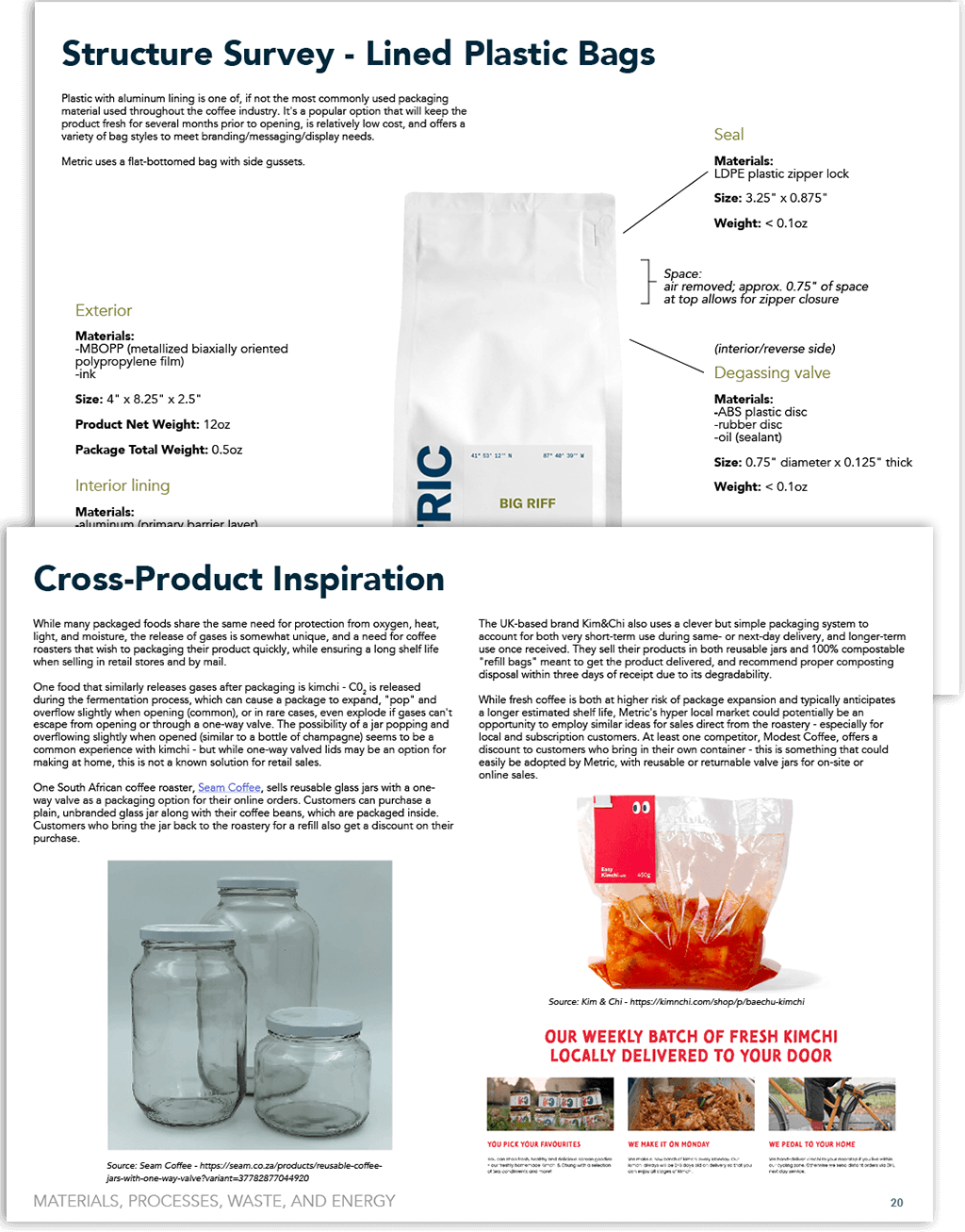
The lined bags used by Metric and the vast majority of coffee brands was also analyzed and compared to other types of coffee packaging to determine if a more sustainable option was readily available. To be an appealing alternative for Metric, the materials needed to meet the needs of a small-scale roaster, namely comparable pricing for both the product and distribution, and similar ability to preserve the product quality. From a sustainability perspective, opportunities to improve upon a standard coffee bag would need to look at the entire lifecycle of the package, from raw material extraction to manufacturing processes, transport, use, and end of life in the Chicago area where the product is sold. Since most coffee packaging is typically made of mixed materials, this would also need to be a consideration when weighing recycling vs. composting at its end of life.
SOLUTION
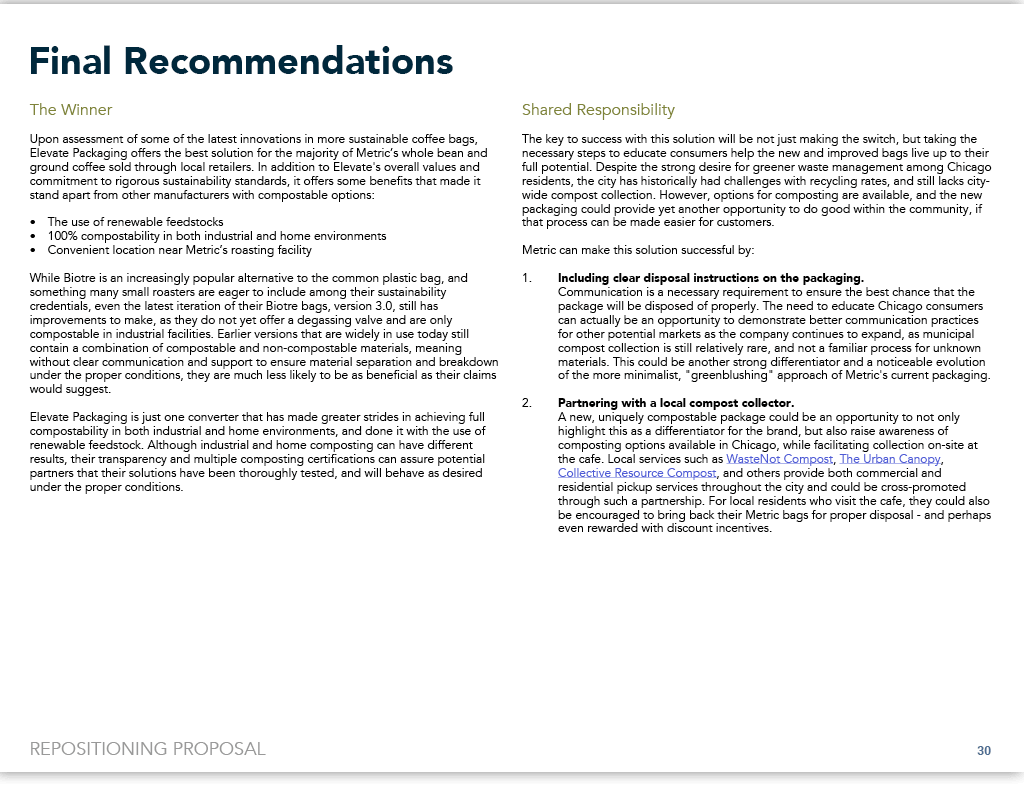
After assessing a variety of packaging options for both coffee and other food products with similar needs, the final recommendation was a local manufacturer of plant-based compostable bags. These particular bags were the most environmentally friendly across the board, from materials to transport to end of life, and could serve as a model for other local brands. Additionally, messaging on the label could help to educate customers on proper disposal and promote Chicago's existing composting infrastructure.
As secondary recommendations beyond the packaging itself, the company could also follow other locally-focused food retailers and offer refillable containers and partnership with local composting services.